Artigas and Rivera: an Adventure through Amethysts, Vineyards, and Border Culture
- Wine Explorers Uruguay
- May 6
- 5 min read
Our journey to northern Uruguay took us through Artigas and Rivera in a completely new experience for Wine Explorers. Over two days, we discovered amethyst mines, family-owned wineries, border landscapes, local gastronomy, and wine projects with an identity deeply shaped by their surroundings. An adventure through Amethysts and vineyards that reminded us, once again, of everything Uruguay has to offer when explored with time, curiosity, and a sensitive eye.
On April 18 and 19, we experienced something very special in the north of our country, traveling through the departments of Artigas and Rivera with a wonderful group.
It was a different, intense, and highly enjoyable journey, designed to discover a region that is often left out of Uruguay’s more traditional tourist circuits, yet holds enormous natural, cultural, and human richness.
Mining Safari in Artigas: Amethysts and Breakfast Underground

Our first stop was in Artigas, where we experienced one of the most unique activities in the country: the Mining Safari inside an amethyst mine.
Amethysts are semi-precious stones formed more than 130 million years ago inside ancient volcanic formations. Artigas is one of the most important places in the world for their production, attracting visitors from different parts of the globe who are interested in experiencing this extraordinary landscape up close.
The experience began in an unforgettable way: with breakfast at Uruguay’s first underground restaurant, located inside the mine itself, several meters below the surface.
We then entered the mine to explore a truly striking setting, almost from another planet, where we were able to discover the origin of these stones up close and better understand the natural, historical, and cultural value of this activity.
To close the visit, we also explored the workshop where the amethysts are worked, seeing part of the process that transforms the stone into unique pieces.
It was the perfect way to begin the journey and set the tone for the whole experience: this was not only about wine, but about discovering northern Uruguay in all its forms.
Finca Tessmann: The Northernmost Winery in Uruguay

After the Mining Safari, we continued on to Finca Tessmann, known until recently as Casa Tannat.
Located in Artigas, it is the northernmost winery in Uruguay and represents a boutique, family-owned, and completely authentic project. Tannat plays an important role here, but the experience allowed us to discover that its identity goes far beyond a single grape variety.
We were welcomed by Claudia, who leads this project together with her husband, Host Tessmann, and who opened the doors of her home to us with enormous warmth.
We enjoyed a spectacular countryside lunch, prepared with dedication and care, paired with a selection of their high-end wines. In such an intimate and natural setting, the experience had something truly special: the closeness of the people behind the project and the possibility of experiencing it from within.
It was, without a doubt, one of the great surprises of the trip.
Tren do Pampa: Landscape, Music, and Border Culture

The following day, in Rivera, we boarded the Tren do Pampa, departing from the rural area of Santana do Livramento.
For approximately an hour and a half, we traveled through the Gaúcho countryside in an experience that combines landscape, music, border culture, and wines from the Brazilian winery Almadén.
The journey allowed us to connect with the very particular identity that exists along the border between Uruguay and Brazil, where languages, accents, traditions, and roots come together in a very natural way.
On board, live music and cultural performances gave the experience a very special energy, making it one of the most memorable and fun moments of the trip.
Viñas del 636: A Family Project Facing the Border
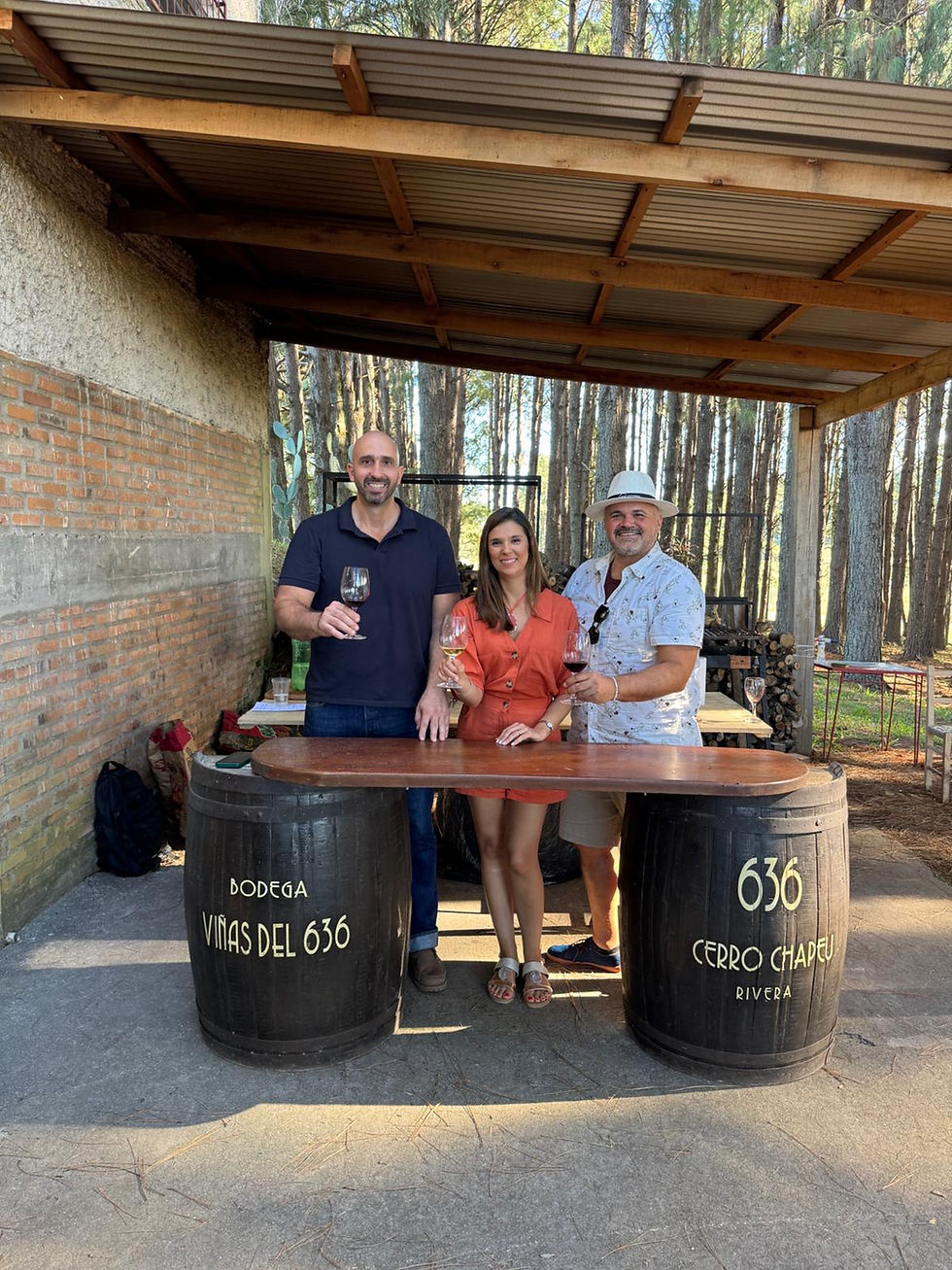
We then continued on to Viñas del 636, a family-owned winery located in Rivera, in a setting where Uruguay and Brazil meet permanently.
Its name is related to border marker 636 between the two countries, located in front of the vineyard area. This detail perfectly reflects the spirit of the place: a project shaped by border identity, the landscape, and a family story expressed in every wine.
There, we were welcomed by Thiago, the winery’s winemaker, who shared with us the story of the project, its way of working, and the identity of its wines, which are marked by the absence of oak or any components that could interfere with their authenticity.
The visit continued with a homemade countryside lunch, warm and highly enjoyable, accompanied by all of their wines. It was a generous, authentic, and very personal experience.
Viñas del 636 allowed us to continue discovering how Uruguayan wine is also expressed through lesser-known territories, full of character.
Cerro Chapeu: A Winery Built into a Hill
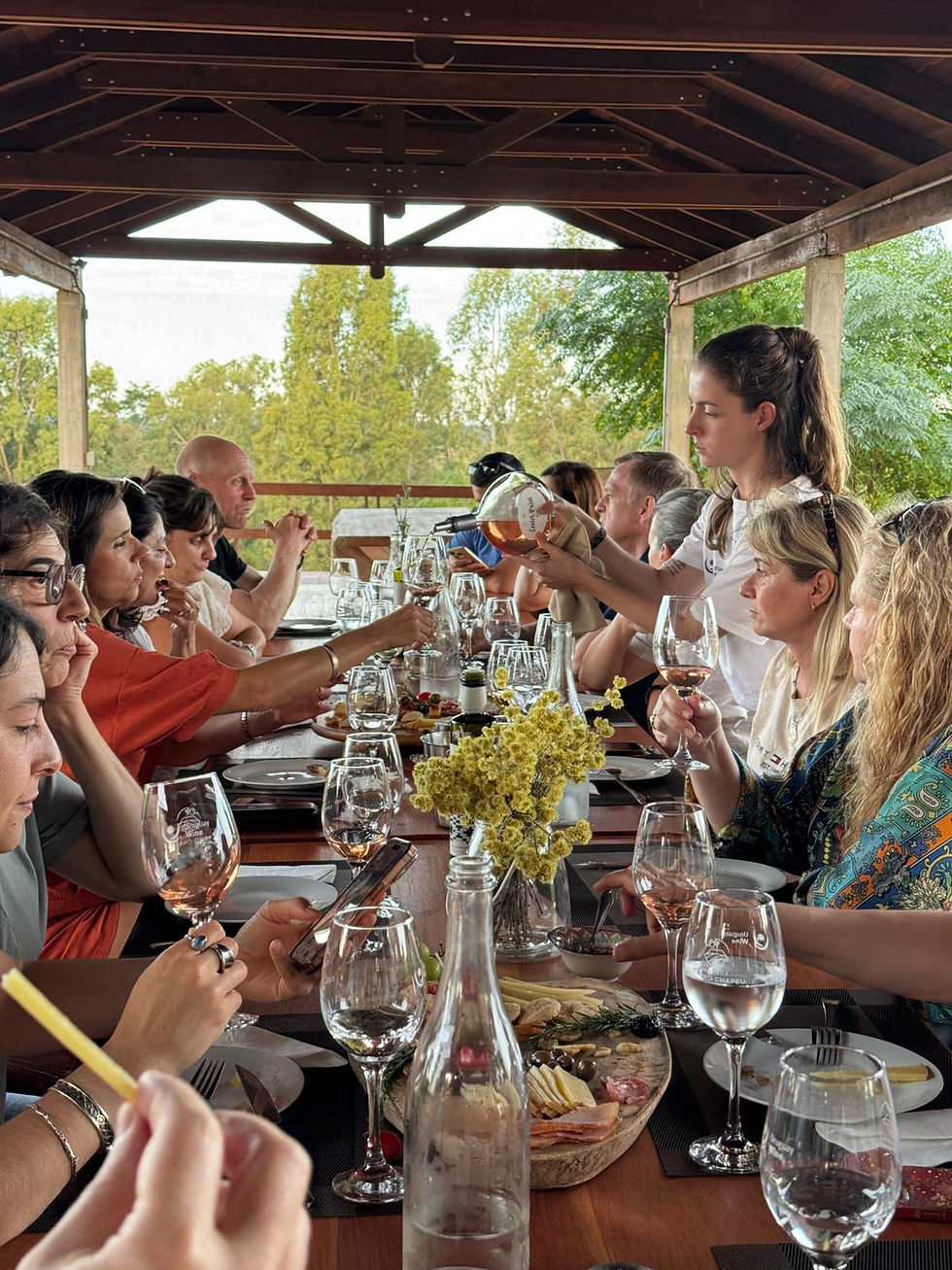
To close the weekend, we visited Bodega Cerro Chapeu, one of the most emblematic wineries in northern Uruguay.
Its history spans generations, with family origins dating back to Catalonia in 1752. Today, in Rivera, this project finds a very particular expression in a border landscape between Uruguay and Brazil.
The winery was built into a hill and designed on different levels to work by gravity, a winemaking approach that seeks to preserve the essence of the wine as much as possible.
During the visit, we toured its facilities and discovered part of its philosophy, in a setting dominated by the distinctive view of the hill that gives the winery its name.
The experience ended with a tasting of its wines, accompanied by carefully selected flavors, in an unforgettable natural landscape.
It was the perfect ending to a journey that allowed us to discover a different side of wine tourism in Uruguay.
Wine Tourism in Uruguay: The Value of Discovering New Paths
This journey through Artigas and Rivera reminded us that wine tourism in Uruguay goes far beyond the most well-known regions.
Northern Uruguay has so much to offer: unique landscapes, wineries with their own identity, family projects, border culture, local gastronomy, and experiences unlike any other.
At Wine Explorers, we believe that traveling is also about opening doors, creating encounters, and discovering places through a thoughtful, authentic, and sensitive perspective.
That is why this weekend was so special. Because it brought together wine, nature, history, culture, and hospitality in a deeply genuine way.
Thank you to every person who trusted this journey, to every place that opened its doors to us, and to the entire team that made this experience possible with a level of hospitality we are truly proud of.
And thank you to the wonderful group that joined us with so much joy, energy, and willingness to live every moment.
Northern Uruguay has so much to offer, and it is truly worth exploring.
Photos: Tavis Davidson
If you would like to join one of our group wine tours in Uruguay, we invite you to explore our upcoming events or subscribe to our newsletter here


Comments